

Ingested vs. Injected
Understanding How the Body Processes Toxins Differently

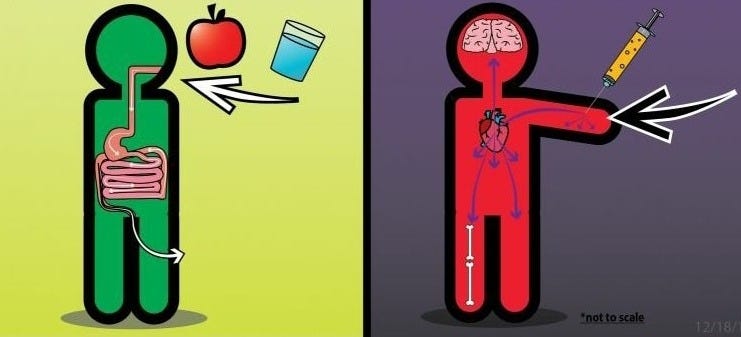
When discussing vaccine safety, a common argument is that certain vaccine ingredients, such as aluminum, are "safe" because we ingest them in food and water regularly. However, this argument overlooks a critical distinction: the body processes substances very differently depending on whether they are ingested or injected. Understanding this fundamental difference should make any parent or individual think twice about what is being injected directly into their or their children's bodies.
How the Body Handles Ingested Substances
When we eat or drink something, it goes through a highly regulated and protective process before it enters the bloodstream:
Digestive Barriers: The mouth, stomach, and intestines contain enzymes, stomach acid, and beneficial bacteria that help break down, neutralize, and filter substances before they are absorbed.
Liver Detoxification: Once nutrients and other compounds pass through the intestinal lining, they go directly to the liver via the portal vein. The liver acts as a powerful filter, metabolizing and removing many harmful substances before they reach circulation.
Excretion Pathways: The body has natural detoxification mechanisms (kidneys, liver, lymphatic system, and colon) that work to eliminate waste and harmful compounds safely.
Because of these safeguards, the body can handle small amounts of naturally occurring toxins in food and water, mitigating their potential harm.
How the Body Handles Injected Substances
When a substance is injected—especially directly into muscle (intramuscularly) or the bloodstream (intravenously)—the body's protective barriers are bypassed entirely:
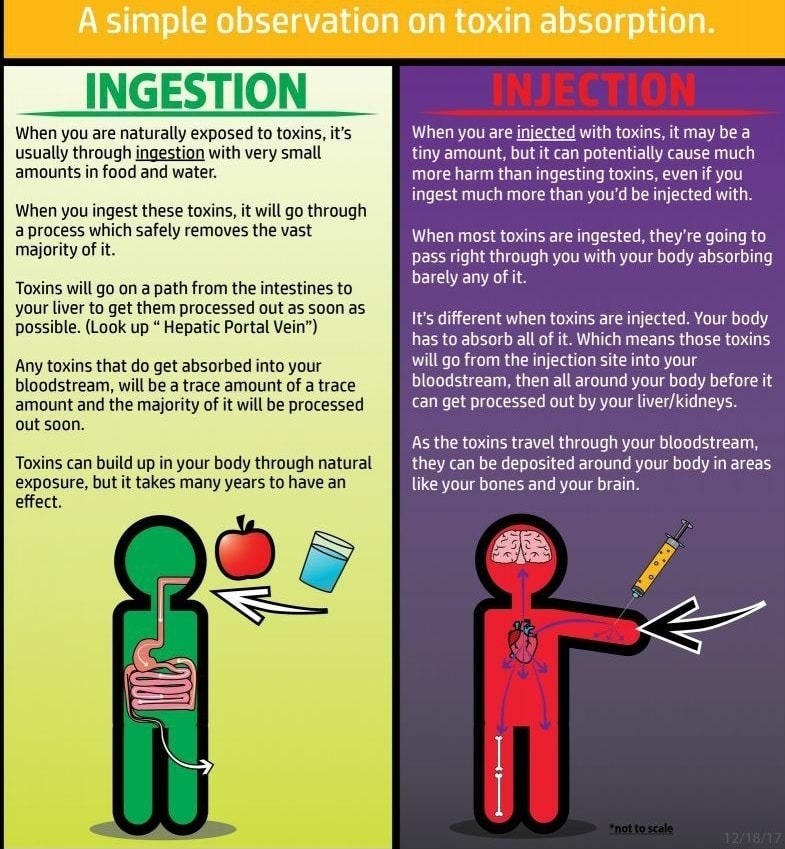
No Digestive or Liver Filtering: Injected substances do not go through the stomach, intestines, or liver first. This means toxins like aluminum, mercury (thimerosal), polysorbate 80, and formaldehyde enter the body in a way that prevents natural detoxification mechanisms from neutralizing them.
Direct Access to Organs and the Brain: Many vaccine ingredients are designed to stimulate an immune response, and adjuvants like aluminum are used to provoke inflammation. Because the blood-brain barrier in infants is not fully developed, neurotoxic substances have a higher likelihood of reaching the brain.
Longer Retention in the Body: Studies have shown that injected aluminum persists in the body much longer than ingested aluminum. Ingested aluminum is largely excreted, but injected aluminum can accumulate in the brain, bones, and organs, potentially leading to long-term health consequences.
Why This Matters for Vaccine Safety
Given these differences, the claim that "we ingest aluminum, so injecting it is no different" is misleading and scientifically unsound. The body is equipped to handle and excrete many toxins when ingested but is far less capable of doing so when injected. This raises serious concerns about the safety of vaccines, which contain not only aluminum but also other potentially harmful ingredients.
Parents and individuals should be encouraged to research vaccine ingredients thoroughly and critically question the assumption that all injected substances are "safe and effective." The difference between ingestion and injection is not trivial—it fundamentally changes how a substance interacts with the body and its ability to detoxify.
Before making any medical decision, especially for children, it is essential to understand the science, read the research, and be aware of the potential risks. No one should feel pressured into accepting an injection without fully understanding what is in it and how it affects the body.