

Colloidal Silver
A Time-Tested Natural Tool with Remarkable Antimicrobial Properties

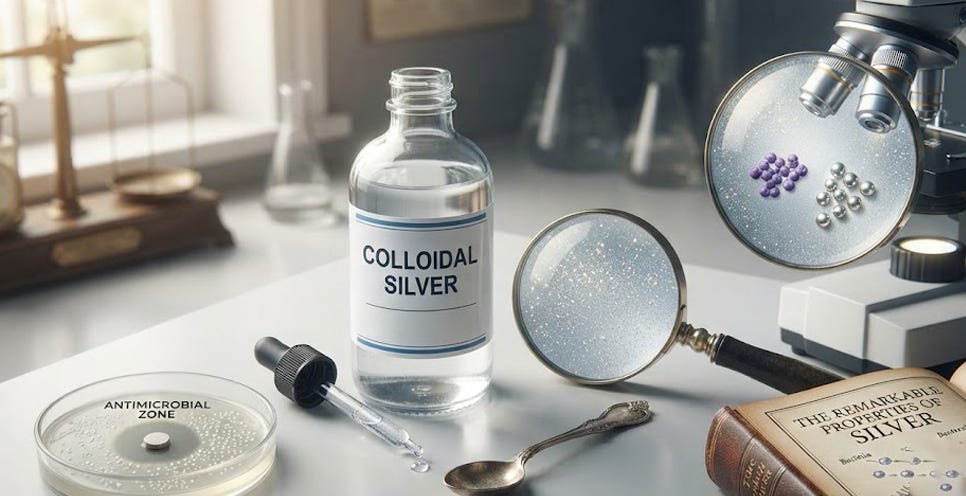
For centuries, silver has been valued for its ability to help prevent the growth of harmful microbes. Long before the discovery of antibiotics, people stored water, milk, and other perishables in silver containers because they noticed they stayed fresh longer. Today, while colloidal silver remains controversial—especially when marketed as a cure-all—it is undeniable that silver continues to have important medical and industrial uses because of its antimicrobial properties.
Rather than accepting extreme claims from either side, we should be willing to examine the evidence with an open mind and understand where silver has been shown to be useful and where more research is still needed.
What Is Colloidal Silver?
Colloidal silver is a suspension of microscopic silver particles dispersed in purified water. These tiny particles remain suspended in the liquid rather than dissolving completely.
Silver itself is not an antibiotic. Instead, laboratory research has shown that silver ions can interfere with the survival of many bacteria, fungi, and some viruses by:
Damaging microbial cell membranes
Interfering with enzymes necessary for growth
Disrupting DNA replication in certain microorganisms
Making it more difficult for microbes to reproduce
Because silver attacks microbes through multiple mechanisms, resistance appears to develop less readily than with many conventional antibiotics.
Silver Is Already Used Throughout Modern Medicine
One of the most interesting facts is that silver is not rejected by modern medicine. In fact, it is used extensively in healthcare settings because of its antimicrobial properties.
Some common examples include:
Silver-Coated Medical Devices
Many hospitals use silver-coated:
Foley catheters
IV catheters
Endotracheal (breathing) tubes
Certain wound dressings
The purpose is to reduce bacterial growth on these devices and lower the risk of infection.
Silver Sulfadiazine for Burn Patients
One of the most well-known medical uses is silver sulfadiazine cream.
Burn victims are especially vulnerable to dangerous infections because their protective skin barrier has been damaged. Silver sulfadiazine has long been used to help prevent bacterial infections in these wounds.
Silver Wound Dressings
Modern wound care frequently includes silver-impregnated dressings designed for:
Chronic wounds
Diabetic ulcers
Pressure sores
Surgical wounds
These dressings slowly release silver where it is needed.
Water Purification
Silver has also been incorporated into some water filtration systems because it can help inhibit microbial growth. Silver-containing materials have been used in various water treatment applications, particularly where preventing bacterial contamination is important.
Potential Benefits People Report
Many individuals who use colloidal silver believe it has helped them with issues such as:
Supporting wound healing
Skin irritations
Minor cuts and abrasions
Oral hygiene
Sinus rinses (using specially prepared sterile products)
General immune support
Some practitioners also recommend it as part of broader wellness protocols. However, many of these uses have limited high-quality clinical evidence, and effectiveness can vary.
Natural Doesn’t Mean Reckless
Many natural substances have remarkable health benefits, but wisdom requires balance.
A healthy lifestyle should always include:
Nutritious whole foods
Good sleep
Regular physical activity
Stress management
Clean water
Fresh air
Proper hygiene
Seeking appropriate and trusted care when needed
Natural tools such as herbs, nutrients, and substances like silver may have a place in supporting health, but they should be used thoughtfully and with an understanding of both their potential benefits and limitations.
The Importance of Critical Thinking
While colloidal silver should not be viewed as a miracle cure, neither should silver’s well-documented antimicrobial applications be ignored.
Instead of accepting sensational claims from either supporters or critics, we should examine the evidence carefully, recognize where silver has established medical uses, acknowledge where evidence is still developing, and make informed decisions based on sound research rather than fear or hype.
Ultimately, the goal is not to chase miracle cures, but to pursue wisdom, discernment, and a lifestyle that supports the body’s incredible ability to heal and maintain health.